HeapDeck
The on-call deck for PostgreSQL on iPhone and iPad. See who is blocking, how close the server is to wraparound and which replication slot is filling the disk, then act from your phone, with no server of mine between the app and your database.
$ specsheet heapdeck
- role
- Solo developer
- year
- 2026
- platforms
- iOS 17+ · iPadOS 17+
- stack
- Swift 6 · SwiftUI · PostgresNIO · SwiftNIO SSL
- status
- released
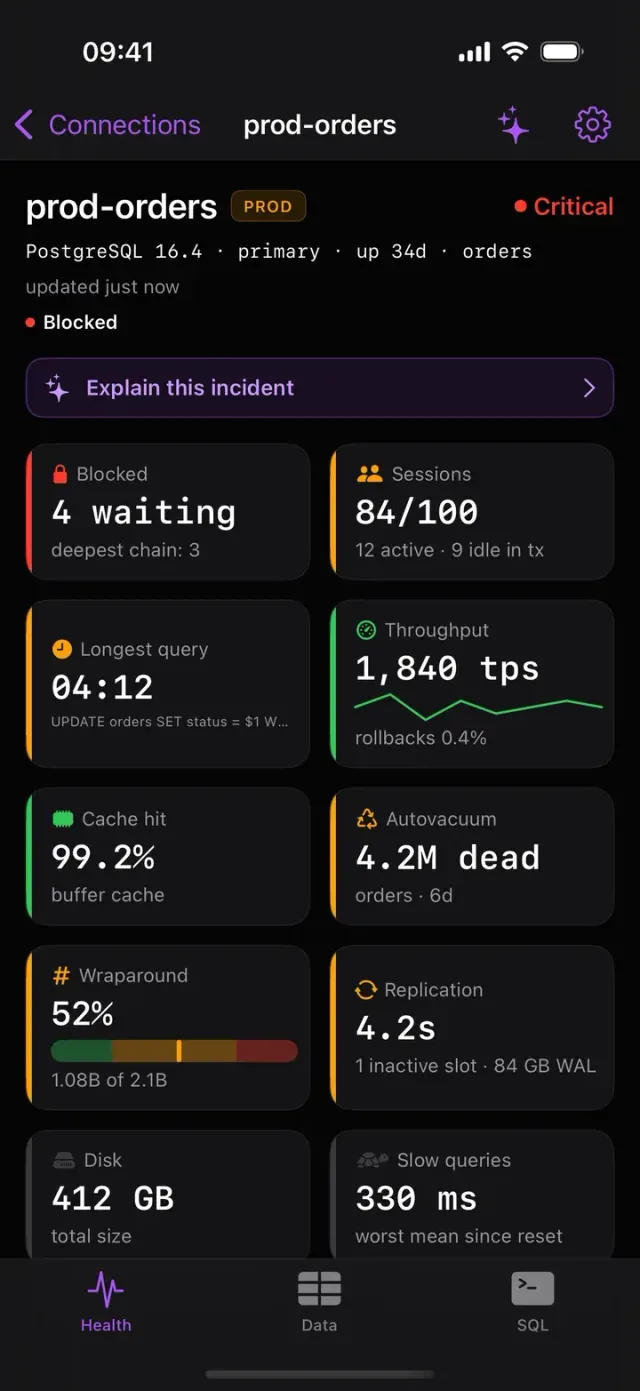
HeapDeck, listed on the App Store as HeapDeck: Postgres® Monitor, is a native iPhone and iPad app for the engineer on call for PostgreSQL 13–18. It opens on the state of the server, with the list of tables one tab away. The product site has use cases and guides for each kind of incident.
Problem
An alert reaches you wherever you are. The tools that can do something about it sit on a laptop. Typing joins across pg_stat_activity on a phone keyboard over SSH is slow and error-prone at 3 a.m. Most PostgreSQL apps for iPhone are SQL clients, built around tables and queries.
Solution
HeapDeck opens on Health: one verdict and ten tiles with fixed thresholds. A screen sits behind each tile.
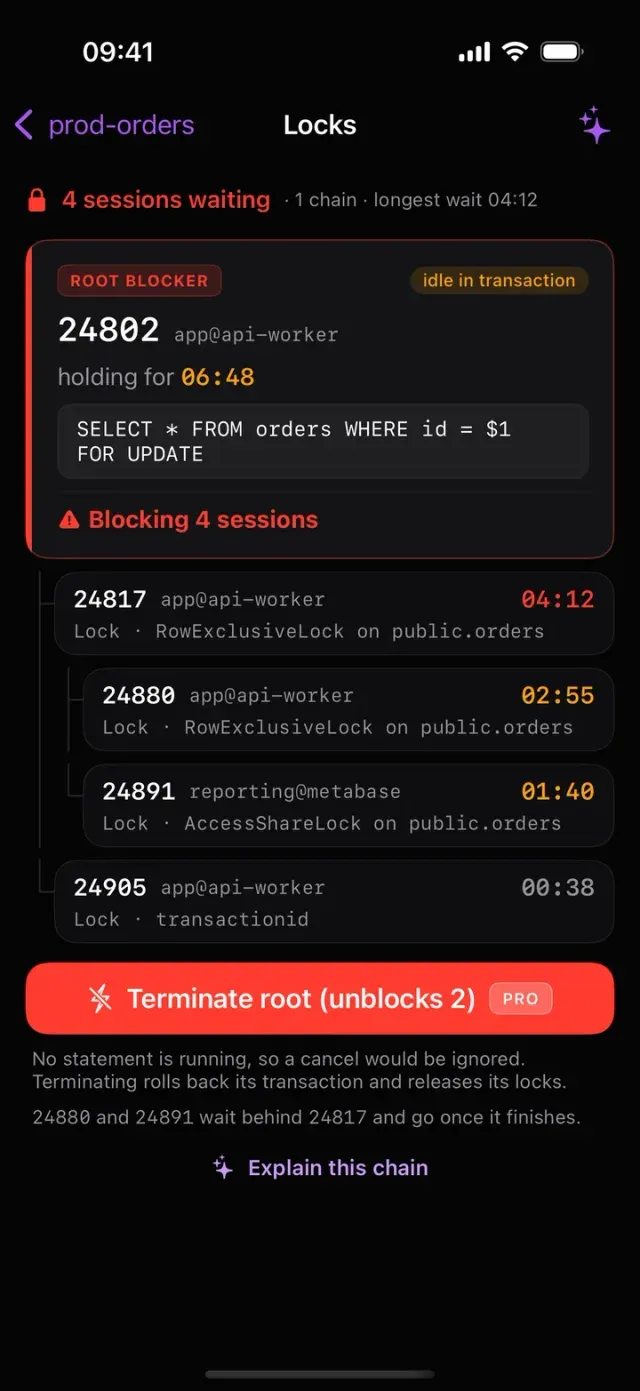
- Locks draws the tree from
pg_blocking_pids(), with the root blocker on top and the number of sessions you free by stopping it. - Activity lists sessions from
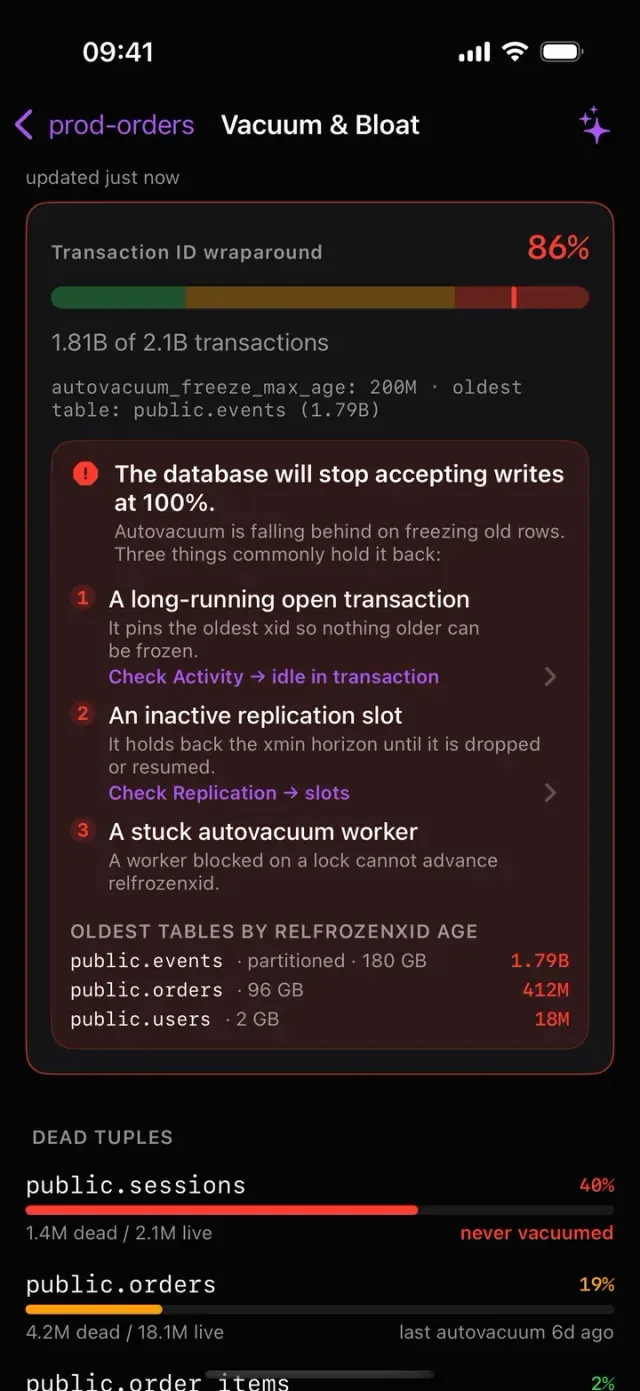
pg_stat_activity, waiting ones first, with cancel and terminate. - Vacuum & Bloat shows wraparound as a share of 2³¹, the oldest tables, dead tuples and unused indexes.
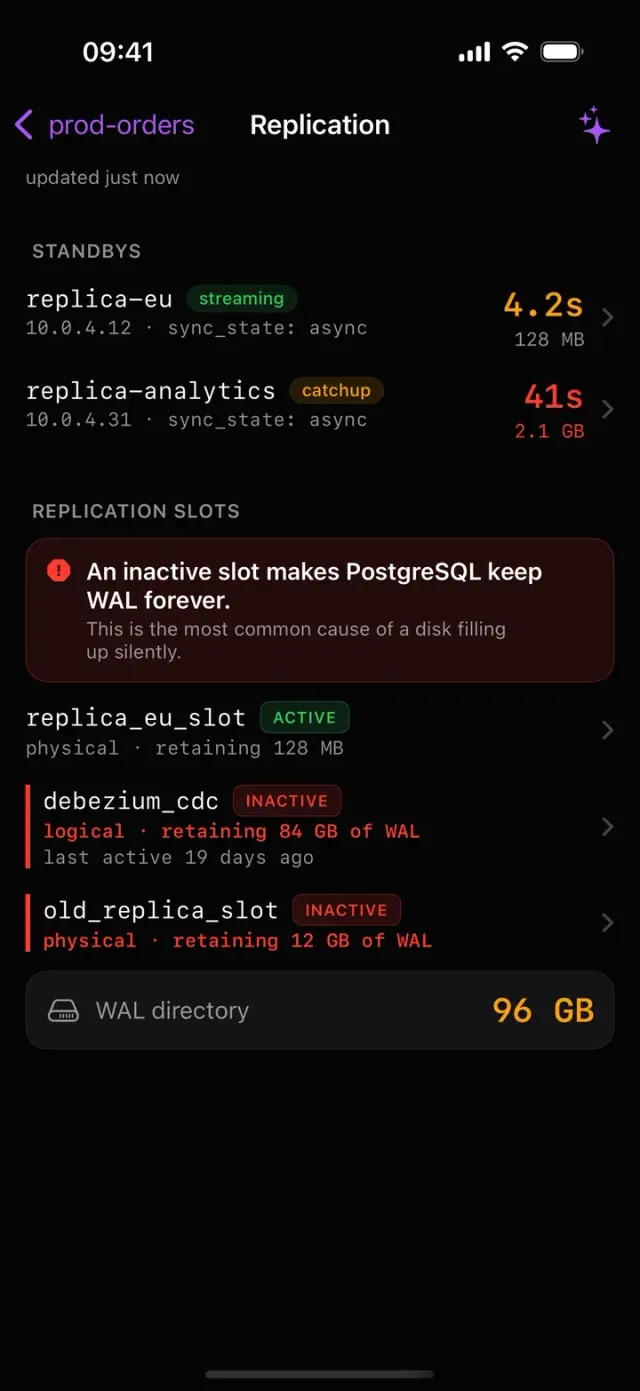
- Replication shows lag by WAL phase and the WAL each slot retains, with a warning for an inactive slot.
- Slow queries ranks the 300 heaviest statements from
pg_stat_statements.
HeapDeck has no alerts and no metric history. It works while open and goes next to the alerting you already run.
Engineering Highlights
- Direct connection: the PostgreSQL v3 protocol through PostgresNIO, with no server of mine in the path. I checked Neon, Supabase and Amazon RDS live.
- SSH tunnel through a bastion: a route of up to three hosts, with Ed25519, ECDSA or RSA keys, or a key in the Secure Enclave.
- Pinned trust: HeapDeck pins TLS certificates and SSH host keys, and a changed key blocks the connection.
- Re-read before acting: HeapDeck reads the lock chain again before it signals a root, stops if the numbers changed, and afterwards reports what it measured.
- SQL classifier: each statement gets a class before it runs, on Free as well. Destructive steps ask you to type the target’s name.
- Permission labels: a role without
pg_monitorsees labels for what PostgreSQL hides and theGRANTthat fixes it. - Tested against real servers: a live test matrix in Docker covers PostgreSQL 13 to 18.
- Credentials on the device: passwords and keys stay in the iOS Keychain with no sync. Crash reports and usage counters sit behind a consent screen, each with its own switch, and carry no query text, host names or values.
Outcome
On the App Store since October 2026. Monitoring one server is free, with no account. HeapDeck Pro is a one-time purchase with no subscription, for unlimited servers and the actions: cancel, terminate, VACUUM, dropping a slot, writes and an AI assistant with your own key.
Postgres, PostgreSQL and the Slonik Logo are trademarks or registered trademarks of the PostgreSQL Community Association of Canada, and used with their permission. HeapDeck is an independent client and is not affiliated with, endorsed by, or sponsored by the PostgreSQL Community Association of Canada, PostgreSQL Global Development Group, PostgreSQL Project, PostgreSQL Core Team, or PostgreSQL Community.
Amazon Web Services, AWS and Amazon RDS are trademarks of Amazon.com, Inc. or its affiliates. Neon and Supabase are trademarks of their respective owners. HeapDeck is not affiliated with or endorsed by any of them.
$ open ./screenshots
Screenshots